image

image_mobile

Image_disclaimer
Not real patients.
label
Explore
headline
How was TUKYSA® (tucatinib) studied?
headline
TUKYSA was studied in a clinical trial called MOUNTAINEER
card_identifier
heading
Who was in the trial?
body
To participate in this study, these adults must have:
- Previously received fluoropyrimidine-, oxaliplatin-, and irinotecan-based chemotherapy (some patients had also received immunotherapy)
- Had tumors that were both RAS wild-type and HER2+
- Never received any therapy that targets HER2
card_identifier
heading
How many people were in this trial?
body
MOUNTAINEER included 84 people with RAS wild-type, HER2+ colorectal cancer that could not be removed by surgery (unresectable) or had spread to other parts of the body (metastatic).
card_identifier
heading
What treatments did they receive?
body
The trial only studied people receiving TUKYSA and trastuzumab. Because they were not directly compared with people receiving any other treatment for RAS wild-type, HER2+ metastatic colorectal cancer, no conclusions can be drawn about the relative effectiveness of TUKYSA + trastuzumab and other treatments.
headline
What were the clinical trial results?
image
headline
With the TUKYSA regimen,* some people saw their tumors shrink or disappear
content
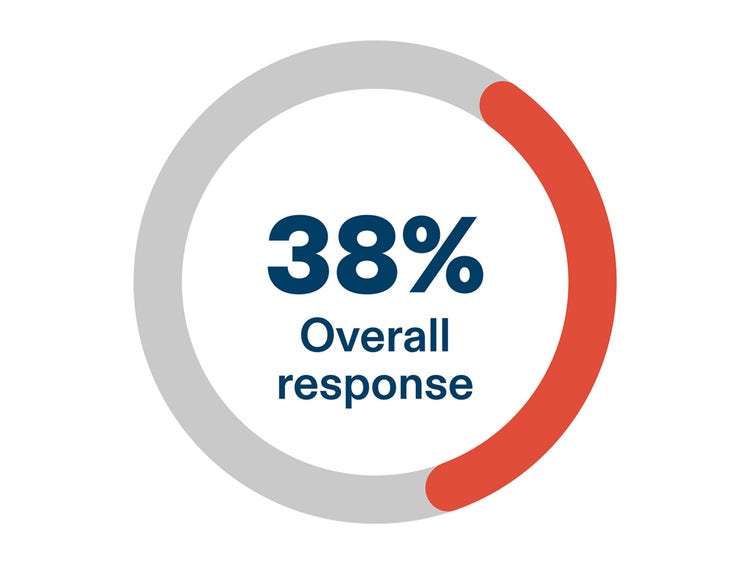
- Tumors shrink, or “partial response,” means that the amount of cancer in the body, or the size of the tumor, decreased after treatment. Of the 84 people in the study, 29 saw a partial response
- Tumors disappear, or “complete response,” means that all signs of cancer were gone after treatment. This doesn’t mean that cancer was cured. 3 of 84 people in the study saw their tumors disappear
- Overall response rate is the percentage of patients whose cancer shrinks or disappears after treatment. 32 of 84 people (38%) saw an overall response
*TUKYSA regimen: TUKYSA and trastuzumab.
The TUKYSA regimen may not work for everyone.
image
headline
How long did patients respond to TUKYSA + trastuzumab treatment?
content
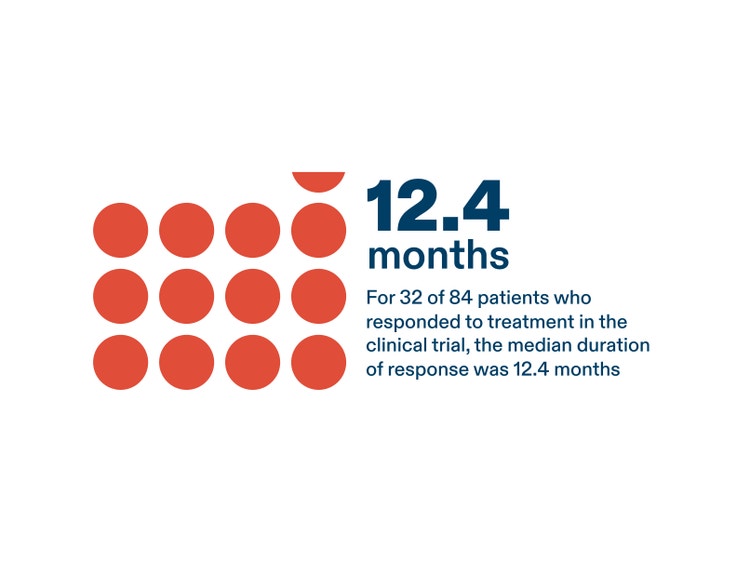
Another outcome that was measured in the clinical trial in patients who responded to treatment was the duration of response (DOR).
This is the length of time that tumors continued to respond to treatment. The clinical trial also measured the median DOR.
Median is defined as the middle number in a group of numbers arranged from lowest to highest.
This is the length of time that tumors continued to respond to treatment. The clinical trial also measured the median DOR.
Median is defined as the middle number in a group of numbers arranged from lowest to highest.
headline
What are the possible side effects?
content
Your healthcare provider will discuss possible side effects before you take TUKYSA.
icon
headline
Serious side effects
content
During treatment with TUKYSA, serious side effects may occur and should be treated by your healthcare provider as early as possible.
- 22% of people treated with TUKYSA and trastuzumab had serious side effects
- The most common serious side effects were blockage of the intestine, urinary tract infection, pneumonia, stomach-area (abdomen) pain, and tear (perforation) in the rectum
icon
headline
Common side effects
content
The most common side effects of TUKYSA in combination with trastuzumab in adults with RAS wild-type HER2-positive colorectal cancer include:
- diarrhea
- rash
- stomach-area (abdomen) pain
- fever
- tiredness
- nausea
- infusion-related reactions
headline
More about side effects
content
- These are not all the possible side effects of TUKYSA and trastuzumab
- Nearly everyone in the trial had some side effects
- TUKYSA may cause fertility problems in males and females, which may affect the ability to have children. Talk to your healthcare provider if you have concerns about fertility
- Possible symptoms of infusion-related reactions are itching, rash, fever, chills, redness in the face or neck, and swelling of the tongue, lips, or eyelids
- Side effects are unwanted reactions to a drug. Common side effects are those that happen often and to many people. Some side effects may be serious and require emergency medical care
headline
Be sure to tell your healthcare provider about any side effects you have.
content
They may be able to help you find ways to manage them. Your healthcare provider may change your dose of TUKYSA, temporarily stop, or permanently stop treatment with TUKYSA if you have certain side effects.
buttons