image

image_mobile

Image_disclaimer
Not real patients.
label
Explore
headline
How was TUKYSA® (tucatinib) studied?
headline
TUKYSA was studied in a clinical trial called HER2CLIMB
headline
What were the clinical trial results?
headline
The TUKYSA regimen* helped people live longer without their cancer growing or spreading
content
In the trial, the median (midpoint of a set of numbers arranged in order highest to lowest) amount of time people lived without cancer growing or spreading was 7.8 months with the TUKYSA regimen* versus 5.6 months with the placebo regimen.†
Out of 612 people in the trial, the first 480 people enrolled were included in this portion of the results. 320 people took the TUKYSA regimen* and 160 people took a placebo regimen.†
*TUKYSA regimen: TUKYSA, trastuzumab, capecitabine
†Placebo regimen: Placebo, trastuzumab, capecitabine
Out of 612 people in the trial, the first 480 people enrolled were included in this portion of the results. 320 people took the TUKYSA regimen* and 160 people took a placebo regimen.†
*TUKYSA regimen: TUKYSA, trastuzumab, capecitabine
†Placebo regimen: Placebo, trastuzumab, capecitabine
image
headline
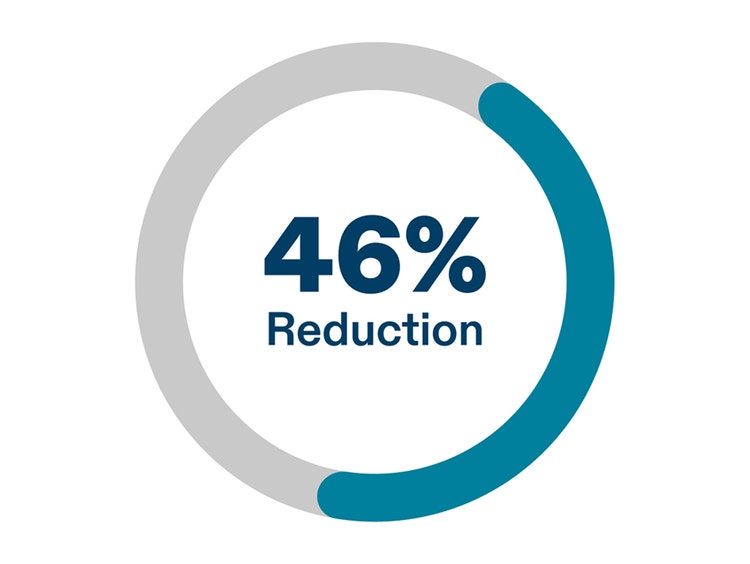
The TUKYSA regimen* reduced risk of disease progression or death by 46%
content
Over the course of the trial, the TUKYSA regimen* led to a 46% reduction in the chance of disease progression or death compared with the placebo regimen.†
*TUKYSA regimen: TUKYSA, trastuzumab, capecitabine
†Placebo regimen: Placebo, trastuzumab, capecitabine
*TUKYSA regimen: TUKYSA, trastuzumab, capecitabine
†Placebo regimen: Placebo, trastuzumab, capecitabine
headline
The TUKYSA regimen* helped people live longer compared with the placebo regimen†
icon
content
All 612 people in the trial were included in this portion of the results. 410 people received the TUKYSA regimen (TUKYSA, trastuzumab, capecitabine) and 202 people received the placebo regimen (placebo, trastuzumab, capecitabine).
*TUKYSA regimen: TUKYSA, trastuzumab, capecitabine
†Placebo regimen: Placebo, trastuzumab, capecitabine
*TUKYSA regimen: TUKYSA, trastuzumab, capecitabine
†Placebo regimen: Placebo, trastuzumab, capecitabine
image
Image_disclaimer
280 out of 410 people taking the TUKYSA regimen (TUKYSA, trastuzumab, capecitabine) were still alive at the time of data
analysis.
117 out of 202 people taking the placebo regimen (placebo, trastuzumab, capecitabine) were still alive at the time of data analysis.
headline
Median overall survival
content
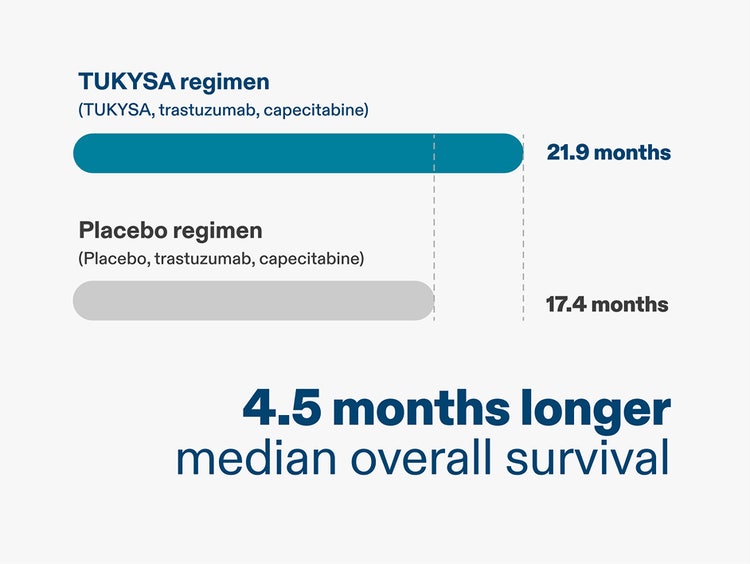
In the clinical trial, those who took the TUKYSA regimen* saw a median overall survival rate of 21.9 months. Those who took the placebo regimen† saw a median overall survival rate of 17.4 months.
Those who took the TUKYSA regimen* lived 4.5 months longer compared to those taking the placebo regimen.†
Over the course of the trial, the TUKYSA regimen* led to a 34% reduction in the chance of death when compared with the placebo regimen.†,‡
*TUKYSA regimen: TUKYSA, trastuzumab, capecitabine
†Placebo regimen: Placebo, trastuzumab, capecitabine
Those who took the TUKYSA regimen* lived 4.5 months longer compared to those taking the placebo regimen.†
Over the course of the trial, the TUKYSA regimen* led to a 34% reduction in the chance of death when compared with the placebo regimen.†,‡
*TUKYSA regimen: TUKYSA, trastuzumab, capecitabine
†Placebo regimen: Placebo, trastuzumab, capecitabine
image
Image_disclaimer
177 out of 410 people taking the TUKYSA regimen (TUKYSA, trastuzumab, capecitabine) were still alive at the time of data analysis.
65 out of 202 people taking the placebo regimen (placebo, trastuzumab, capecitabine) were still alive at the time of data analysis.
65 out of 202 people taking the placebo regimen (placebo, trastuzumab, capecitabine) were still alive at the time of data analysis.
headline
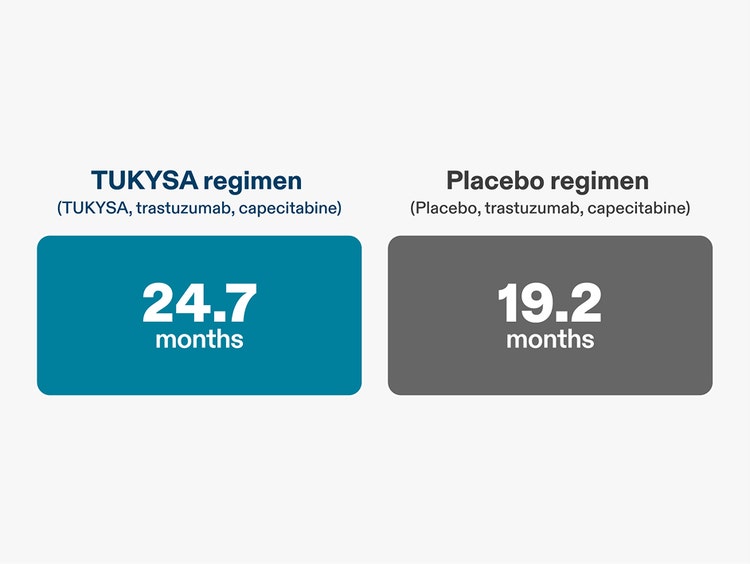
Median overall survival at follow-up
(exploratory analysis)
content
Results depicted in this follow-up analysis are exploratory. This means that the study was not designed to find differences between the two groups. Please interpret with caution.
About 2 years after the last person was enrolled in the trial, researchers completed a follow-up analysis, which included overall survival. This analysis was planned prior to the start of the trial.
About 2 years after the last person was enrolled in the trial, researchers completed a follow-up analysis, which included overall survival. This analysis was planned prior to the start of the trial.
headline
The TUKYSA regimen* helped people with brain metastases live longer without their cancer growing or spreading compared to the placebo regimen†
content
For people living with brain metastases during the clinical trial, the median amount of time that cancer did not grow or spread was 7.6 months for those who took the TUKYSA regimen,* versus 5.4 months for those who took the placebo regimen.†
*TUKYSA regimen: TUKYSA, trastuzumab, capecitabine
†Placebo regimen: Placebo, trastuzumab, capecitabine
*TUKYSA regimen: TUKYSA, trastuzumab, capecitabine
†Placebo regimen: Placebo, trastuzumab, capecitabine
image
headline
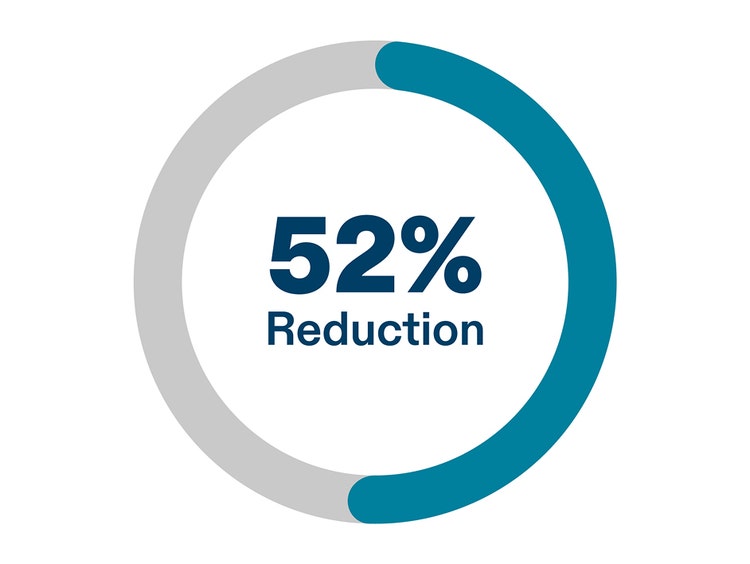
Reduction in the chance of disease progression or death for people with brain metastases
content
For people in the trial with brain metastases, the TUKYSA regimen* led to a 52% reduction in the chance of disease progression or death compared with the placebo regimen.†
Of people who had brain metastases, 198 people took the TUKYSA regimen* and 93 people took the placebo regimen.†
*TUKYSA regimen: TUKYSA, trastuzumab, capecitabine
†Placebo regimen: Placebo, trastuzumab, capecitabine
Of people who had brain metastases, 198 people took the TUKYSA regimen* and 93 people took the placebo regimen.†
*TUKYSA regimen: TUKYSA, trastuzumab, capecitabine
†Placebo regimen: Placebo, trastuzumab, capecitabine
headline
What are the possible side effects?
content
You may experience side effects during treatment.
icon
headline
Serious side effects
content
- 26% of people treated with TUKYSA, along with trastuzumab and capecitabine, had serious side effects
- These serious side effects included:
- diarrhea
- vomiting
- nausea
- abdominal pain
- seizure
icon
headline
Common side effects
content
- diarrhea
- rash, redness, pain, swelling, or blisters on the palms of the hands or soles of the feet
- nausea
- increased liver function blood tests
- vomiting
- mouth sores (stomatitis)
- decreased appetite
- a low number of red blood cells (anemia)
- rash
headline
More about side effects
content
- These are not all the possible side effects of TUKYSA, and you may also get side effects from the other medicines taken with TUKYSA
- Nearly everyone in the trial had some side effects
- People in the HER2CLIMB clinical study were not required to take an antidiarrheal medicine
- TUKYSA may cause fertility problems in males and females, which may affect the ability to have children. Talk to your healthcare provider if you have concerns about fertility
headline
Be sure to tell your healthcare provider about any side effects you have.
content
They may be able to help you find ways to manage them. Your healthcare provider may change your dose of TUKYSA, temporarily stop, or permanently stop treatment with TUKYSA if you have certain side effects.
buttons